
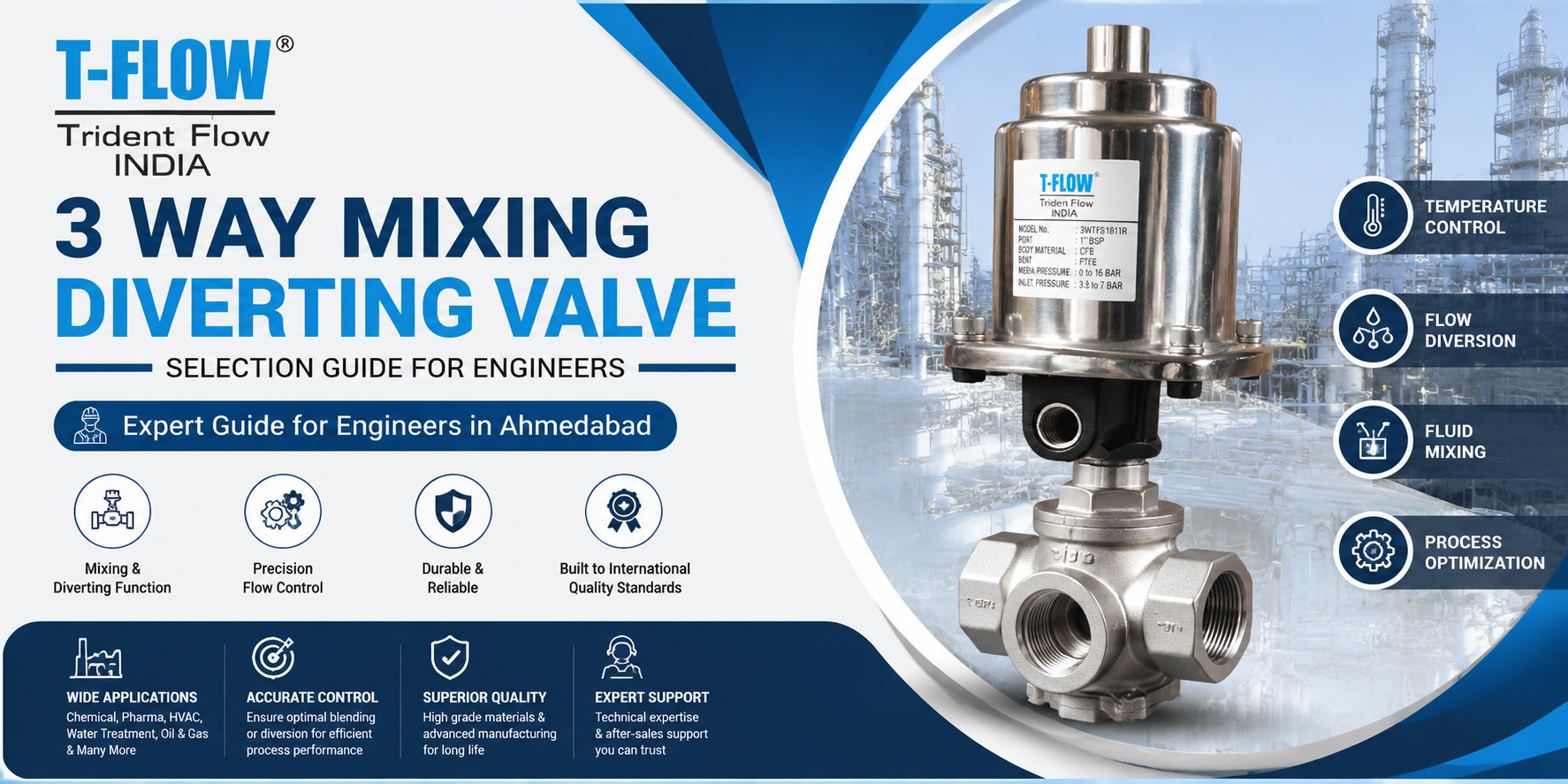
3 Way Mixing Diverting Valve Selection Guide for Engineers
Expert guide for engineers in Ahmedabad on selecting the right 3 Way Mixing Diverting Valve. Learn about features, applications, and quality standards.
Why This Matters in Ahmedabad
Ahmedabad's industrial landscape is diverse, encompassing textiles, pharmaceuticals, chemicals, and manufacturing. Each sector relies heavily on precise fluid control systems to maintain product quality, optimize production cycles, and ensure operational safety. The demand for reliable and efficient valves, particularly those capable of complex flow management like 3 Way Mixing Diverting Valves, is consistently high. Proper valve selection directly influences process efficiency, reduces waste, and prevents costly downtime, making it a key concern for engineers and plant managers across the region.
What is a 3 Way Mixing Diverting Valve — Overview
A 3 Way Mixing Diverting Valve is a type of control valve designed with three ports. It can be configured to perform two primary functions: mixing or diverting. In its mixing configuration, it takes two separate fluid streams and combines them into a single outlet stream, often used for temperature control or blending. In its diverting configuration, it takes a single inlet stream and directs it to one of two different outlet ports, allowing for process routing or flow control. These valves are typically actuated by pneumatic, electric, or hydraulic power, enabling precise control over the fluid flow path and volume.
Key Features and Technical Specifications
When evaluating a 3 Way Mixing Diverting Valve, several key features and specifications are essential to consider for optimal performance and suitability:
- Body Material: Options typically include Cast Iron, Stainless Steel (SS304, SS316), Carbon Steel, or specialized alloys, chosen based on fluid compatibility and operating conditions.
- Seat and Seal Material: Materials like PTFE, EPDM, or Viton are critical for ensuring leak-proof operation and compatibility with the process fluid.
- End Connections: Available in Flanged, Screwed, or Welded types, matching the existing piping system requirements.
- Actuator Type: Pneumatic, Electric, or Hydraulic actuators, selected based on available utilities, control precision, and fail-safe requirements.
- Flow Characteristic: Can be designed for equal percentage, linear, or quick-opening flow, depending on the application's control needs.
- Pressure and Temperature Ratings: Must meet or exceed the maximum operating pressure and temperature of the system.
- Size and Port Configuration: Available in various nominal sizes and port configurations (e.g., L-port, T-port) to suit specific flow paths.
- Certifications: Compliance with relevant industry standards (e.g., ISO, API) for quality and safety assurance.
Industrial Applications and Use Cases
The versatility of 3 Way Mixing Diverting Valves makes them indispensable across a wide array of industrial sectors:
- Chemical Processing: Blending different chemicals or diverting product streams to various reactors or storage tanks.
- Pharmaceutical Manufacturing: Precise temperature control for reactions or sterile fluid routing.
- Oil and Gas: Managing flow in pipelines, diverting crude oil, or controlling gas streams.
- Water Treatment: Diverting treated water to different distribution lines or mixing chemicals for purification.
- HVAC Systems: Controlling hot and cold water flow to regulate building temperatures.
- Food and Beverage: Blending ingredients or diverting product flow during processing and packaging.
- Power Generation: Managing steam or cooling water flow in turbines and boilers.
- Automotive Manufacturing: Controlling coolant flow or diverting fluids in assembly processes.
How to Choose the Right 3 Way Mixing Diverting Valve
Selecting the correct valve requires a systematic approach. Consider these critical factors:
- Process Fluid Analysis: Understand the chemical composition, viscosity, temperature, and pressure of the fluid being handled.
- Flow Rate Requirements: Determine the maximum and minimum flow rates needed for both mixing and diverting functions.
- Control Accuracy: Assess the level of precision required for blending ratios or diversion accuracy.
- Operating Environment: Consider ambient temperature, humidity, and potential corrosive elements in the surrounding atmosphere.
- System Pressure Drop: Evaluate how the valve will affect the overall system pressure and ensure it meets design parameters.
- Fail-Safe Position: Decide if the valve should fail open, closed, or to a specific position in case of actuator power loss.
- Maintenance Accessibility: Ensure the valve can be easily accessed for routine maintenance and potential repairs.
- Supplier Reputation and Support: Choose a manufacturer with a proven track record and reliable after-sales service.
Quality Standards and Compliance
Adherence to recognized quality standards and compliance with industry regulations are non-negotiable for industrial valves. Buyers should verify that the 3 Way Mixing Diverting Valve meets specifications such as ISO 9001 for quality management systems, ensuring consistent manufacturing processes. Depending on the application, certifications like API (American Petroleum Institute) standards might be relevant for oil and gas applications, or specific national standards like BIS (Bureau of Indian Standards) if mandated. Understanding these standards ensures the valve is designed, manufactured, and tested to perform reliably and safely under demanding industrial conditions.
Why Trident Flow Controls' Experience and Capability Matters
With over two decades of experience in manufacturing industrial valves, Trident Flow Controls brings a depth of expertise to the selection and supply of 3 Way Mixing Diverting Valves. Our manufacturing processes are honed to ensure precision and durability, utilizing advanced techniques and quality control measures at every stage. Our engineering team possesses the technical acumen to understand complex fluid dynamics and application requirements, enabling us to recommend or customize valves that precisely fit your operational needs. We are committed to delivering valves that not only meet but exceed industry expectations for performance and longevity, backed by a robust quality assurance system.
Installation, Maintenance, and Care Tips
Proper installation and regular maintenance are crucial for the longevity and optimal performance of your 3 Way Mixing Diverting Valve.
- Installation: Ensure the valve is installed in the correct orientation as per the manufacturer's guidelines. Verify that end connections are properly sealed to prevent leaks. For actuated valves, ensure the actuator is correctly connected and calibrated.
- Commissioning: Before full operation, conduct a thorough leak test and cycle the valve several times to ensure smooth movement and proper functioning of the actuator.
- Routine Checks: Periodically inspect the valve body, seals, and actuator for any signs of wear, corrosion, or leakage.
- Lubrication: If applicable, follow the manufacturer's recommendations for lubricating moving parts, especially for the actuator.
- Cleaning: Keep the valve and surrounding area clean to prevent debris from interfering with operation.
- Actuator Maintenance: For pneumatic actuators, check air supply quality and pressure. For electric actuators, ensure electrical connections are secure and the motor is functioning correctly.
- Seal Replacement: Seals are wear items; plan for periodic replacement based on operating hours and fluid aggressiveness to maintain leak-proof integrity.
Frequently Asked Questions
A 3 Way Mixing Diverting Valve serves two main purposes: it can either blend two separate fluid streams into a single outlet (mixing function) or take a single inlet stream and direct it to one of two different outlet ports (diverting function). This makes it highly versatile for process control.
Valve sizing depends on the required flow rate, pressure drop across the valve, and the fluid's properties. You need to calculate the Cv (flow coefficient) required for your application and match it with the valve's specifications, considering the desired flow characteristic.
Common body materials include Cast Iron, Stainless Steel (SS304, SS316), and Carbon Steel. Seat and seal materials vary based on fluid compatibility and temperature, with options like PTFE, EPDM, and Viton being popular choices.
Yes, 3 Way Mixing Diverting Valves can be used for steam, but they must be specifically designed for high-temperature and high-pressure steam service. Appropriate materials and seal types, such as metal seats and specialized packing, are essential for steam applications.
An L-port valve typically allows for straight-through flow or a 90-degree diversion. A T-port valve offers more flexibility, allowing for straight-through flow, 90-degree diversion, or even simultaneous mixing and diverting of multiple streams, depending on the port design.
A fail-safe position is the valve's state when the actuator loses power or control signal. It's crucial for safety and process integrity. Common fail-safe positions are "fail-open" (allowing flow to continue) or "fail-closed" (stopping flow), chosen based on the potential hazards of the process.
Conclusion
Selecting the appropriate 3 Way Mixing Diverting Valve is a decision that requires careful consideration of your specific process requirements, fluid characteristics, and operational environment. By understanding the valve's functions, key specifications, and application suitability, engineers can make informed choices that enhance system efficiency and reliability. Partnering with an experienced manufacturer like Trident Flow Controls ensures you receive a high-quality valve backed by technical expertise and a commitment to customer satisfaction, vital for maintaining smooth operations in Ahmedabad's dynamic industrial sector.