
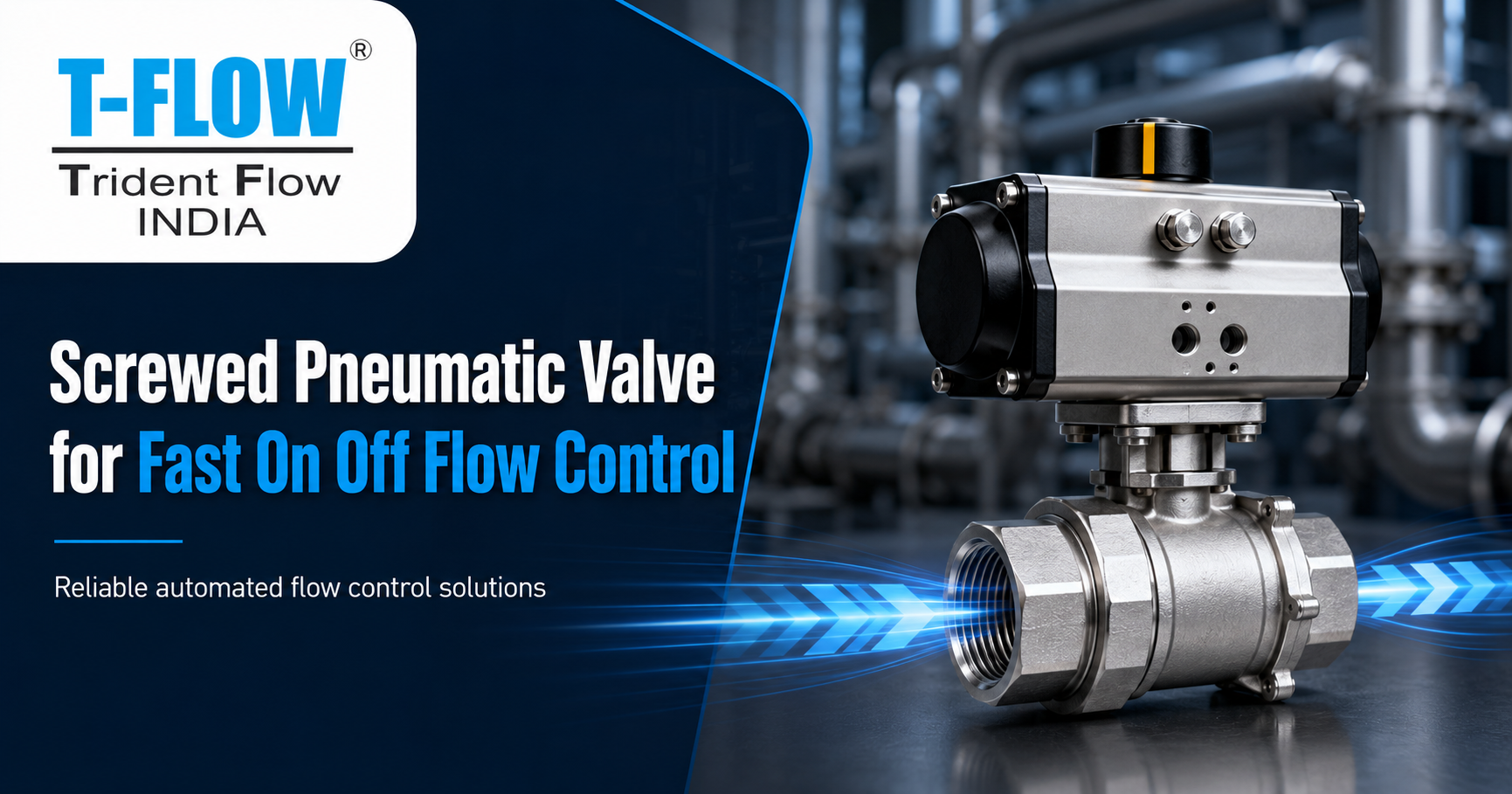
Screwed Pneumatic Valve for Fast On Off Flow Control
Discover screwed pneumatic valves for rapid on-off flow control in Ahmedabad. Learn about applications, selection, and quality from Trident Flow Controls.
Why This Matters in Ahmedabad
Ahmedabad's thriving industrial landscape, encompassing sectors from pharmaceuticals and chemicals to textiles and manufacturing, relies heavily on precise process control. Many of these industries, including the significant presence of oil and gas, water treatment, and HVAC systems, require components that can reliably manage flow with speed and accuracy. The demand for robust, automated solutions that minimize downtime and ensure operational safety is paramount. Screwed pneumatic valves are well-suited to meet these stringent requirements, offering a dependable method for quick flow interruption or initiation in complex industrial setups across the region.
What is a Screwed Pneumatic Valve — Overview
A screwed pneumatic valve is an automated valve designed for quick on-off operation, actuated by compressed air. It features threaded connections, allowing for straightforward installation into piping systems without the need for welding or complex flanging. The valve body houses a sealing mechanism, typically a ball or plug, which is rotated to either permit or block fluid flow. Its pneumatic actuator receives a signal from a control system, translating it into mechanical force to rapidly move the sealing element to its open or closed position. This combination of threaded ends and pneumatic actuation makes it ideal for applications demanding fast response times and ease of maintenance.
Key Features and Technical Specifications
- Threaded Connections: Standard NPT or BSP threads for easy integration into existing pipework.
- Pneumatic Actuation: Utilizes compressed air for rapid and reliable opening and closing cycles.
- Quick On-Off Functionality: Designed for swift, decisive flow interruption or passage.
- Compact Design: Often smaller and lighter than flanged equivalents, simplifying installation.
- Material Options: Available in various materials like brass, stainless steel, or carbon steel to suit different media and environmental conditions.
- Sealing Mechanism: Typically employs a ball valve design for a tight seal when closed.
- Pressure Ratings: Specified working pressure limits ensure safe operation within design parameters.
- Temperature Range: Defined operational temperature limits for reliable performance.
Industrial Applications and Use Cases
- Process Isolation: Rapidly shutting off flow in chemical processing lines during emergencies or maintenance.
- Automated Batching: Controlling the precise start and stop of fluid delivery in automated batch production systems.
- Utility Lines: Managing compressed air, steam, or water supply to machinery where quick shut-off is needed.
- HVAC Systems: Automating the control of chilled or hot water flow in large building management systems.
- Oil and Gas Skids: Used in modular process units for quick flow control and safety interlocks.
- Pharmaceutical Manufacturing: Implementing fast on-off control for ingredient transfer or purification steps.
- Water Treatment Plants: Controlling the flow of chemicals or treated water in various stages of the purification process.
- Machine Tooling: Integrating into automated machinery for precise fluid or coolant flow management.
How to Choose the Right Screwed Pneumatic Valve
Selecting the appropriate screwed pneumatic valve involves considering several critical factors to ensure optimal performance and longevity.
- Flow Media Compatibility: Verify that the valve's body and seal materials are compatible with the fluid being handled to prevent corrosion or degradation.
- Pressure and Temperature Ratings: Ensure the valve's specifications exceed the maximum operating pressure and temperature of your system.
- Connection Size and Type: Match the valve's threaded size and type (NPT, BSP) to your existing piping.
- Actuator Type and Air Supply: Confirm the pneumatic actuator is suitable for your available air pressure and desired actuation speed.
- Flow Coefficient (Cv): Select a valve with an appropriate Cv to ensure sufficient flow capacity when open.
- Cycle Life Requirements: Consider how frequently the valve will operate and choose a model designed for that duty cycle.
- Certifications and Standards: Look for valves that meet relevant industry standards for safety and performance.
- Supplier Reputation and Support: Partner with a reputable manufacturer or supplier offering technical assistance and after-sales service.
Quality Standards and Compliance
For industrial applications, particularly in sectors like pharmaceuticals, oil and gas, and water treatment, adherence to quality standards and compliance is non-negotiable. Buyers should verify that screwed pneumatic valves meet relevant national and international standards. This often includes certifications like ISO 9001 for quality management systems, ensuring consistent manufacturing processes. Depending on the application, specific material certifications (e.g., for stainless steel grades) or compliance with standards like API, ASME, or relevant BIS (Bureau of Indian Standards) specifications might be required. Verifying these credentials with the supplier provides confidence in the valve's reliability, safety, and suitability for the intended operational environment.
Why Trident Flow Controls' Experience and Capability Matters
At Trident Flow Controls, our extensive experience in designing and manufacturing flow control solutions, including screwed pneumatic valves, sets us apart. We understand the critical nature of fast on-off applications across diverse industries in Ahmedabad and beyond. Our manufacturing processes are honed to ensure precision and durability, utilizing quality materials that meet stringent specifications. Our technical team possesses deep expertise in fluid dynamics and automation, enabling us to not only supply standard products but also to offer tailored solutions.
We maintain rigorous quality control throughout our production cycle, from raw material inspection to final product testing. This commitment ensures that every valve leaving our facility performs reliably and safely. Our capability extends to providing comprehensive support, from initial consultation to after-sales service, ensuring our clients receive not just a product, but a complete, dependable flow control solution.
Installation, Maintenance, and Care Tips
Proper installation and regular maintenance are crucial for the longevity and reliable performance of screwed pneumatic valves.
- Installation: Ensure pipe threads are clean and free from debris before installation. Apply appropriate thread sealant sparingly to avoid excess material entering the valve. Hand-tighten the valve onto the pipe, then use a wrench on the valve body flats (not the actuator) for final tightening, referencing the manufacturer's torque specifications. Connect the pneumatic actuator line securely, ensuring a clean and dry air supply.
- Commissioning: Before full operation, cycle the valve several times manually or with low air pressure to check for smooth operation and proper sealing.
- Maintenance: Regularly inspect the valve for external leaks or damage. Periodically check the air supply for the actuator, ensuring it is clean, dry, and at the correct pressure. Lubrication of the actuator may be required based on the manufacturer's recommendations.
- Troubleshooting: If the valve fails to actuate or seal properly, check the air supply, control signal, and for any obstructions within the valve body.
- Storage: If stored for extended periods, ensure valves are kept clean and protected from environmental contaminants.
Frequently Asked Questions
The primary advantage is its combination of rapid on-off flow control via pneumatic actuation and ease of installation due to threaded connections, making it simpler to integrate into existing pipework compared to flanged alternatives.
While they are designed for fast on-off operation, some ball valve designs can be partially opened for limited throttling. However, for precise flow regulation, dedicated control valves are generally recommended.
A clean, dry, and regulated compressed air supply is typically required. The specific pressure range will depend on the valve and actuator size, as specified by the manufacturer.
The size is determined by the pipe diameter and thread type (e.g., NPT, BSP) of the system into which it will be installed. Ensure the valve's internal port size also matches your flow requirements.
Common materials include brass for general applications, stainless steel for corrosive environments or higher purity requirements, and sometimes carbon steel for specific industrial uses. Seal materials vary, with PTFE being a frequent choice.
The lifespan depends heavily on the application, frequency of operation, media compatibility, and maintenance. With proper selection and care, they can last for many years in moderate service.
Conclusion
For industrial facilities in Ahmedabad seeking efficient and rapid on-off flow control, screwed pneumatic valves represent a practical and reliable solution. Their ease of installation, combined with the swift actuation provided by pneumatic power, makes them invaluable for a wide array of applications, from process isolation to automated batching. When selecting a valve, careful consideration of media compatibility, pressure and temperature ratings, and adherence to quality standards is paramount. Partnering with an experienced supplier like Trident Flow Controls ensures you receive not only a high-quality product but also the technical expertise necessary to implement a robust and dependable flow control system tailored to your specific operational needs.
Get In Touch
Trident Flow Controls