
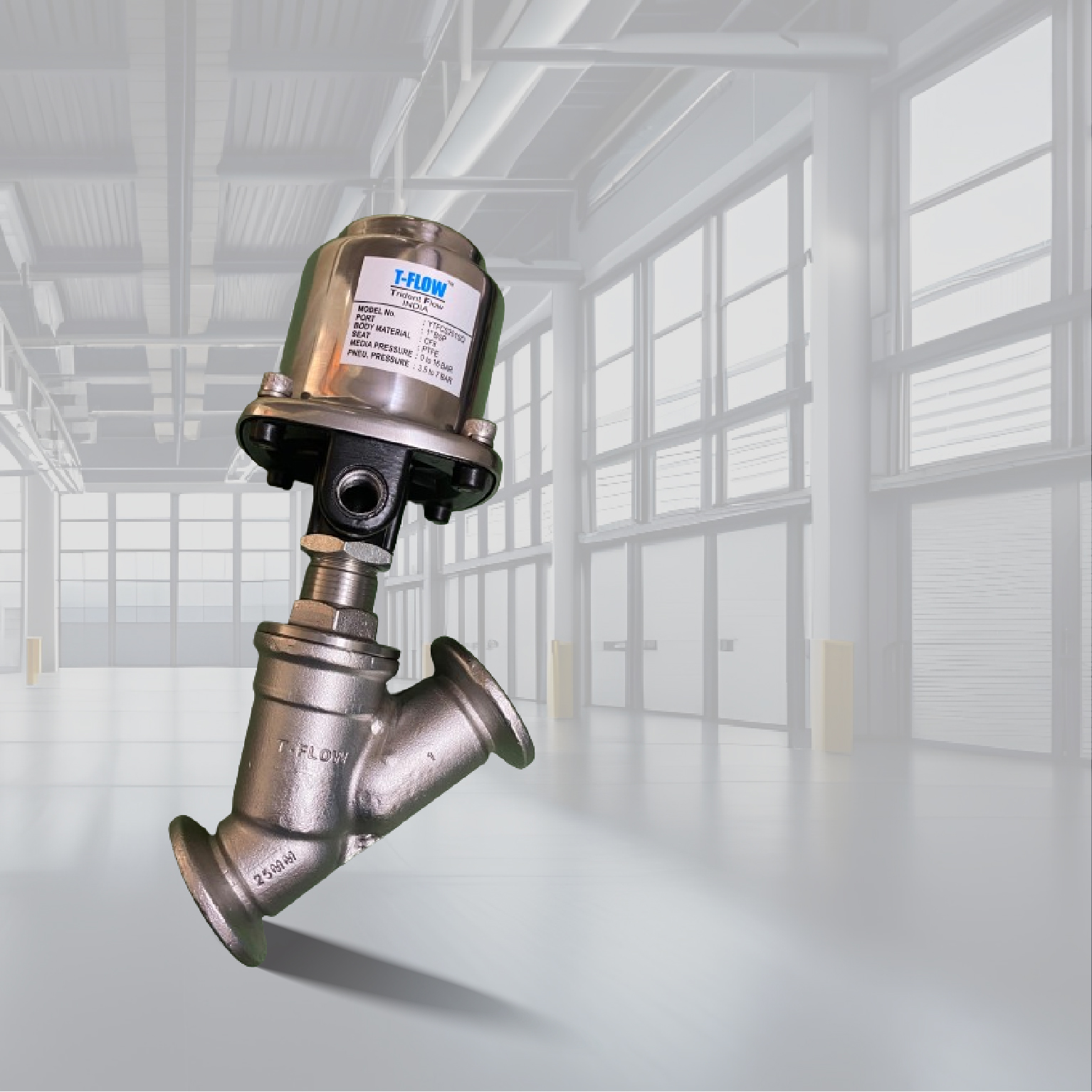
How TC End Angle Seat Valve Supports Quick Cleaning
In the realm of industrial process control, efficiency and cleanliness are paramount. Downtime for maintenance or cleaning can significantly impact productivity and product integrity. Pneumatic angle seat valves, known for their robustness and reliability, play a critical role in managing fluid flow across numerous sectors. Among these, the TC End Angle Seat Valve from Trident Flow Controls offers distinct advantages, particularly in its design that supports exceptionally quick cleaning. This feature is crucial for industries where product changeovers, hygiene standards, or contamination prevention are non-negotiable.
Understanding the Angle Seat Valve
Pneumatic angle seat valves, often referred to as angle body valves or Y-valves, are a type of durable piston valve operated by compressed air. Their unique 'Y' shaped body design is engineered to allow for rapid fluid passage, which translates into high flow rates and minimal pressure loss. This makes them a superior alternative to other valve types like solenoid valves, which can be susceptible to high temperatures or clogging, and ball valves, which are slower and prone to seal wear. Angle seat valves are ideal for applications involving steam, dirty fluids, and high-cycle operations, where consistent performance is essential.
The operational principle involves a pneumatic actuator that moves a piston, controlling the opening and closing of the valve. They can be configured as normally closed (NC), which automatically shuts off flow if the air supply fails, offering a critical safety feature, or normally open (NO). Furthermore, the flow direction can be specified as 'Flow Under Seat' (standard for gases, steam, and general liquids, requiring lower air pressure) or 'Flow Over Seat' (used to mitigate water hammer and ensure smoother closure, especially with fast-moving water).
Industries Benefiting from Quick-Cleaning Valves
The need for quick cleaning in industrial processes is driven by several factors, primarily related to product quality, safety, and operational efficiency. Industries that frequently require rapid cleaning cycles include:
- Pharmaceutical and Process OEM: Maintaining strict hygiene standards is critical. Quick cleaning minimizes the risk of cross-contamination between batches of different products, ensuring product purity and compliance with regulatory requirements.
- Food and Beverage: Similar to pharmaceuticals, the food and beverage industry demands high levels of sanitation. Quick cleaning allows for efficient product changeovers, from one food item to another, without compromising safety or taste.
- Chemicals and Dyes: When handling different chemical formulations, thorough cleaning between production runs is essential to prevent unwanted reactions or product degradation. Speed in this process directly impacts production throughput.
- Water and Treatment Plants: While not always about product changeover, efficient maintenance and cleaning of valve components are necessary to ensure the continuous and optimal functioning of water treatment systems.
- Oil and Gas: In certain processing applications within the oil and gas sector, rapid cleaning can be important for maintenance and to prevent buildup that could affect flow control or valve longevity.
Key Features Supporting Quick Cleaning in Angle Seat Valves
The design of an angle seat valve inherently contributes to ease of maintenance, but specific features can significantly enhance the speed and thoroughness of cleaning. While specific details on Trident Flow Controls' 'TC End' feature were not provided, general design principles applicable to quick-cleaning angle seat valves include:
- Smooth Internal Surfaces: Minimal crevices, sharp edges, or dead zones within the valve body reduce the areas where residue can accumulate, making flushing and cleaning more effective.
- Accessible Internal Components: Designs that allow for easy access to the sealing surfaces, plug, and seat facilitate manual cleaning or inspection without requiring extensive disassembly.
- Robust Seal Materials: High-quality, durable seal materials (like those from stainless steel, nylon, or high nitrile mentioned in general industry facts) can withstand cleaning agents and high-temperature sterilization processes, maintaining their integrity over many cleaning cycles.
- Standardized Connections (e.g., Tri-Clamp): While not exclusive to cleaning, sanitary connections like Tri-Clamp allow for quick and easy removal of the valve for more intensive cleaning or replacement of parts, significantly reducing downtime compared to flanged or threaded connections.
- Self-Draining Design: An internal geometry that promotes complete drainage after use helps prevent residual fluids from stagnating, which is crucial for hygiene.
Practical Benefits of Efficient Cleaning Capabilities
The ability of a TC End Angle Seat Valve to support quick cleaning translates into tangible operational advantages for businesses:
Reduced Downtime
Faster cleaning cycles mean less time the production line is idle, leading to increased output and profitability.
Enhanced Hygiene & Purity
Thorough and rapid cleaning prevents cross-contamination, ensuring product quality and meeting stringent industry standards.
Lower Operational Costs
Less labor and time spent on cleaning, coupled with potentially reduced use of cleaning agents, contribute to cost savings.
Faster Product Changeovers
Switching between different products on the same line becomes more efficient, increasing manufacturing flexibility.
Choosing the Right Angle Seat Valve for Your Needs
When selecting an angle seat valve, especially one prioritizing quick cleaning, several factors should be considered to ensure it aligns with your specific application requirements:
Application Requirements
- Fluid Type: What medium will the valve handle? Consider viscosity, corrosiveness, and potential for particle content.
- Temperature & Pressure: Ensure the valve's material and design can withstand the operating temperature and pressure range. Angle seat valves can handle up to 16 bar and temperatures from -180 to 220 degrees Celsius.
- Flow Rate Needs: The 'Y' design offers high flow; confirm it meets your process demands.
- Cycle Frequency: For high-cycle applications, durability and seal longevity are key.
Cleaning Efficiency Factors
- Internal Geometry: Look for smooth surfaces and minimal dead zones.
- Accessibility: Can key components be easily reached for cleaning or maintenance?
- Connection Type: For sanitary applications, consider Tri-Clamp fittings for quick removal. Threaded and flanged options are also available.
- Material Compatibility: Ensure valve materials (body, seal, plug) are compatible with cleaning agents and the process fluid.
Operational Configuration
- Fail-Safe Operation: Choose NC (Normally Closed) for safety if air supply interruption is a concern.
- Flow Direction: Select 'Flow Under Seat' for general use or 'Flow Over Seat' to prevent water hammer.
Buyer Insight
Don't overlook the importance of the actuator material and seal compatibility. While the valve body handles the process fluid, the actuator's components must also withstand the environment, and the seals are critical for both performance and hygienic operation. Discuss your cleaning agents and procedures with your supplier to confirm material compatibility.
Trident Flow Controls: Your Partner in Process Automation
Trident Flow Controls offers a comprehensive range of industrial valves designed to meet the rigorous demands of modern manufacturing and processing. Their Pneumatic Angle Sheet Valves are engineered for reliability and performance in critical applications across diverse sectors, including the Oil Sector, AHU HVAC SYSTEMS, Chemicals, Dyes & Pigments, Oil and Gas, Pharmaceutical and Process OEM, Refrigeration Compressor and Chilling Industry, Water & Treatment Plants, and the Defence Sector.
Beyond providing high-quality valves, Trident Flow Controls excels in delivering integrated solutions. Their services encompass Project Engineering, Turnkey Projects Execution, Machine Automation Design, and Plant Automation Design. Supported by a Professional Team, they ensure seamless Onsite Commissioning & Start-Up for your projects. Whether you require robust flow control solutions like their Angle Sheet Valves, or comprehensive automation services, Trident Flow Controls is equipped to enhance your operational efficiency and achieve your process objectives.
Frequently Asked Questions
What makes an angle seat valve suitable for high-cycle applications?
Angle seat valves are designed with robust construction, often featuring a spring-loaded mechanism and durable seals. This allows them to withstand frequent opening and closing cycles without significant wear or degradation, ensuring longevity and consistent performance in demanding operational environments.
How does the 'Y' shaped body design benefit flow control?
The 'Y' or angle shape of the valve body creates a more direct and less obstructed flow path compared to traditional globe or gate valves. This design minimizes turbulence and pressure drop, allowing for higher flow rates and more efficient fluid management.
Can angle seat valves handle dirty fluids?
Yes, pneumatic angle seat valves are generally suitable for handling dirty fluids. Their robust design and the ability to use 'Flow Under Seat' configurations, which can help push particles away from the seal, make them more resilient to contamination than some other valve types.
What is the difference between 'Flow Under Seat' and 'Flow Over Seat' configurations?
'Flow Under Seat' is the standard configuration where fluid enters below the valve plug. It's efficient for gases and steam and requires less actuator force. 'Flow Over Seat' directs fluid over the plug, acting as a brake during closure to prevent water hammer and reduce noise, making it ideal for fast-moving liquids like water.
Why is quick cleaning important in pharmaceutical and food industries?
In these industries, preventing cross-contamination between different product batches is crucial for safety, quality, and regulatory compliance. Quick and effective cleaning minimizes the risk of residual materials affecting subsequent products, ensuring purity and preventing costly recalls or batch failures.
Enhance Your Process Efficiency with Trident Flow Controls
Ready to optimize your operations with reliable and efficient flow control solutions? Trident Flow Controls offers a range of pneumatic valves, including angle seat variants designed for demanding applications. Leverage our expertise in Project Engineering and Automation to implement seamless solutions. Contact Trident Flow Controls today to discuss your specific requirements and discover how our products and services can benefit your business.