
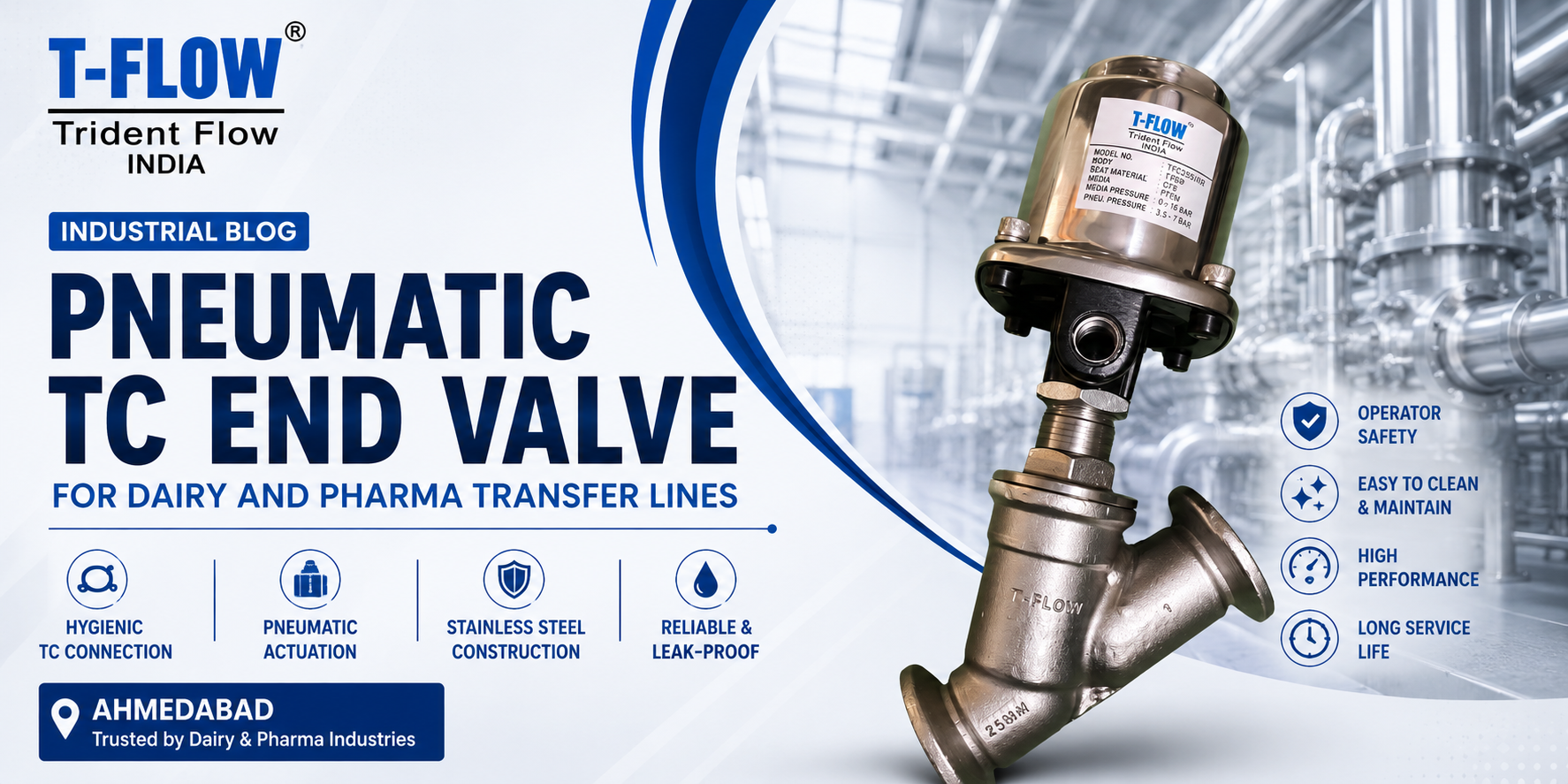
Pneumatic TC End Valve for Dairy and Pharma Transfer Lines
Discover high-performance Pneumatic TC End Valves for dairy & pharma transfer lines in Ahmedabad. Expert solutions from Trident Flow Controls.
Understanding Pneumatic TC End Valves: An Overview
A pneumatic TC end valve, often referred to as a threaded and clamped end valve, is a type of industrial valve designed for applications where hygienic connections are critical. It combines the secure sealing of a clamp connection with the ease of installation often associated with threaded fittings. The valve body itself is actuated pneumatically, meaning it uses compressed air to open or close the flow path, allowing for automated control. The "TC" designation signifies the use of a Tri-Clamp fitting, a standardized connection method widely adopted in sanitary industries for its ability to create a tight, hygienic seal that can be easily disassembled for cleaning.
Key Features and Technical Specifications
Pneumatic TC end valves are engineered with specific features to ensure optimal performance in sensitive applications:
- Pneumatic Actuation: Utilizes compressed air for reliable and rapid valve operation, enabling automation.
- Tri-Clamp (TC) Connections: Standardized sanitary fittings ensure a quick, secure, and hygienic seal, facilitating easy cleaning and maintenance.
- Material Construction: Typically constructed from high-grade stainless steel (e.g., SS304 or SS316L) for superior corrosion resistance and to meet stringent hygiene standards.
- Sealing Materials: Features high-quality, food-grade or pharmaceutical-grade elastomers (like EPDM, Viton, or PTFE) for the valve seat and seals, ensuring chemical compatibility and preventing product contamination.
- Compact Design: Offers a space-saving profile suitable for complex piping layouts common in processing plants.
- Manual Override: Many models include a manual override option for emergency operation or during maintenance.
- Versatile Flow Control: Available in various configurations (e.g., ball valve, diaphragm valve) to suit different flow control needs.
- Pressure and Temperature Ratings: Designed to operate within specific pressure and temperature ranges suitable for typical dairy and pharmaceutical processing conditions.
Industrial Applications and Use Cases
The unique combination of pneumatic actuation, hygienic connections, and robust construction makes these valves indispensable in several industries:
- Dairy Processing: Used in milk transfer lines, cream separation, cheese production, and yogurt manufacturing to maintain product purity and prevent bacterial growth.
- Pharmaceutical Manufacturing: Essential for transferring active pharmaceutical ingredients (APIs), sterile liquids, and intermediate products where absolute cleanliness is non-negotiable.
- Biotechnology: Employed in bioreactors, fermentation processes, and cell culture media transfer lines requiring sterile and controlled environments.
- Food and Beverage: Utilized in beverage production, edible oil processing, and other food manufacturing where sanitary handling of ingredients and finished products is critical.
- Chemical Processing: Applied in specific chemical transfer applications where a hygienic connection and precise control are required, particularly for sensitive or high-purity chemicals.
- Water Treatment: Can be used in specialized clean water or purified water systems requiring sanitary connections.
How to Choose the Right Pneumatic TC End Valve
Selecting the appropriate pneumatic TC end valve involves careful consideration of several factors to ensure it meets your specific operational needs:
- Application Requirements: Clearly define the fluid being handled, its temperature, pressure, and any specific hygiene or purity standards.
- Material Compatibility: Ensure the valve body and seal materials are compatible with the process fluid to prevent corrosion or contamination. SS316L is often preferred for its superior resistance.
- Connection Size and Type: Verify that the TC connection size matches your existing piping and that the valve configuration suits your flow path.
- Actuation Type and Control: Determine if a single-acting (spring return) or double-acting (air-to-open, air-to-close) pneumatic actuator is required, and consider compatibility with your plant's control system.
- Flow Characteristics: Choose a valve type (e.g., ball, diaphragm) that provides the desired flow control and shut-off capabilities for your application.
- Certifications and Compliance: For pharmaceutical and food-grade applications, ensure the valve meets relevant industry standards (e.g., FDA, USP Class VI, 3-A).
- Manufacturer Reputation and Support: Select a reputable manufacturer with a proven track record and reliable after-sales support.
Quality Standards and Compliance
For industries like dairy and pharmaceuticals, adherence to strict quality standards and regulatory compliance is non-negotiable. Pneumatic TC end valves used in these sectors must meet specific certifications to ensure safety, hygiene, and product integrity. Look for valves manufactured from materials like SS316L, which offers excellent corrosion resistance. The sealing components, such as gaskets and seats, should be made from FDA-approved or USP Class VI compliant elastomers like EPDM, Viton, or PTFE.
Furthermore, valves designed for sanitary applications often adhere to standards set by organizations like 3-A in the US or similar international bodies. These standards dictate design, material, and manufacturing processes to ensure cleanability and prevent microbial contamination. Verifying these certifications and material traceability documentation from your supplier is a critical step in ensuring your chosen valve meets all necessary regulatory and operational requirements.
Why Trident Flow Controls' Experience and Capability Matter
At Trident Flow Controls, our extensive experience in designing and manufacturing industrial valves, particularly for sensitive applications, sets us apart. We understand the critical nature of fluid transfer in the dairy and pharmaceutical sectors. Our manufacturing processes adhere to stringent quality control measures, ensuring each pneumatic TC end valve leaving our facility meets the highest standards of performance and reliability.
Our technical team possesses deep expertise in valve engineering, allowing us to offer solutions tailored to specific customer needs. We pride ourselves on our ability to provide robust, hygienic, and durable valves that integrate seamlessly into your automated systems. From material selection to final testing, our commitment to quality assurance guarantees that you receive a product built for demanding operational environments. Our focus on customer satisfaction extends to providing reliable after-sales support and technical guidance.
Installation, Maintenance, and Care Tips
Proper installation and regular maintenance are crucial for maximizing the lifespan and performance of your pneumatic TC end valves.
- Installation: Ensure the valve is installed in the correct flow direction, if applicable. Properly torque the clamp fittings to achieve a secure, leak-free seal without overtightening, which can damage the gasket or clamp. Connect the pneumatic actuator to a clean, dry air supply with appropriate pressure.
- Cleaning: Due to the hygienic nature of TC connections, regular cleaning is essential. Disassemble the valve periodically for thorough cleaning and sanitization using approved cleaning agents. Ensure all components are dried completely before reassembly.
- Lubrication: Pneumatic actuators may require occasional lubrication of moving parts, depending on the manufacturer's recommendations. Consult the actuator's manual for specific guidelines.
- Seal Inspection: Regularly inspect the valve seat and actuator seals for signs of wear, cracking, or degradation. Replace worn seals promptly to prevent leaks and maintain hygienic integrity.
- Actuator Functionality: Periodically test the pneumatic actuator's operation to ensure it opens and closes smoothly and within the expected cycle times. Check for air leaks around the actuator.
Frequently Asked Questions
A pneumatic TC end valve is designed for automated control of fluid flow in hygienic applications. It uses compressed air to operate and features Tri-Clamp connections for easy, secure, and sanitary assembly and disassembly, making it ideal for dairy and pharmaceutical transfer lines.
TC connections are preferred because they create a crevice-free, easily cleanable seal that minimizes the risk of bacterial growth and product contamination. They allow for quick and simple disassembly for cleaning and maintenance, which is crucial for maintaining sanitary standards.
These valves are commonly made from high-grade stainless steel, such as SS304 or SS316L, for excellent corrosion resistance and durability. The sealing components are usually made from FDA-approved elastomers like EPDM, Viton, or PTFE to ensure compatibility and hygiene.
The pneumatic actuator uses compressed air to move a piston or diaphragm, which in turn operates the valve mechanism (e.g., rotates a ball or lifts a diaphragm). This allows for remote and automated control of the valve, enabling integration into process control systems.
Pneumatic actuation offers faster response times, greater consistency, and the ability to automate valve operation as part of a larger process control system. It also reduces the need for manual intervention, improving safety and efficiency in high-volume production environments.
The frequency of seal replacement depends on the operating conditions, the type of fluid, and the cleaning cycles. However, regular inspection is recommended, and seals should be replaced whenever signs of wear, hardening, or leakage are observed to maintain optimal performance and hygiene.
Conclusion
For dairy and pharmaceutical processing facilities in Ahmedabad and beyond, the selection of appropriate valve technology is a critical decision impacting product quality, operational efficiency, and regulatory compliance. Pneumatic TC end valves offer a superior solution, combining the benefits of automated control with the essential hygienic connection required for sensitive transfer lines. By understanding their features, applications, and the importance of quality standards, businesses can make informed choices. Partnering with an experienced manufacturer like Trident Flow Controls ensures access to reliable, high-performance valves backed by expert support, helping to maintain the integrity and efficiency of your critical processes.
Get In Touch
Trident Flow Controls